2026 BUYER'S GUIDE

Compare every category of neck relief tool

Structured heated massager vs heated wrap vs percussion gun vs heating pad vs handheld vibration — our 2026 head-to-head category comparison, with which category fits which daily routine.

Read the buyer's guide →
2026 BUYER'S GUIDE

Cordless shiatsu massager or percussion gun?

The most-asked question we get from desk workers comparing neck tools. Our 2026 decision page: when each is the right pick, why they don't substitute for each other, and when the answer is 'both.'

Read the buyer's guide →
2026 BUYER'S GUIDE

Compare every tool for tech-neck relief

Heated kneading massagers, soft wraps, scalp adjuncts, ergonomic foundations, and the percussion-gun cede — our 2026 cross-category buyer guide for tech-neck tightness, with which tool fits which pattern.

Read the buyer's guide →
2026 BUYER'S GUIDE

Compare heated neck and shoulder massagers

Trying to choose between a cordless shiatsu massager, a percussion gun, or an entry-level shiatsu pillow? Our 2026 buyer's guide compares MeltAway against Theragun, Renpho, and Naipo — with an honest take on which is right for desk-related tightness.

Read the buyer's guide →

Relief for Tech Neck & Posture Pain

Therapeutic massagers designed to release the tension caused by hours of screen time, smartphone use, and poor posture.

What Is Tech Neck?

Tech neck is the chronic strain on your neck and upper shoulders caused by looking down at phones, tablets, and laptops. When your head tilts forward just 15 degrees, it adds roughly 27 pounds of pressure on your cervical spine. Over time, this creates tight muscles, reduced mobility, tension headaches, and referred pain in the shoulders and upper back.

The fix isn't just better posture — you need to actively release the muscles that have tightened. That's where targeted massage therapy comes in.

How Do You Fix Tech Neck At Home?

The most effective at-home approach combines three elements: deep-tissue massage to release tight muscles, heat therapy to increase blood flow, and consistent daily practice. Shiatsu kneading massagers target the trigger points in the trapezius, levator scapulae, and suboccipital muscles — the three muscle groups most affected by forward-head posture. Most users feel noticeable relief after a single 10-15 minute session, with lasting improvements within 1-2 weeks of daily use.

Which Type of Massager Is Best for Tech Neck?

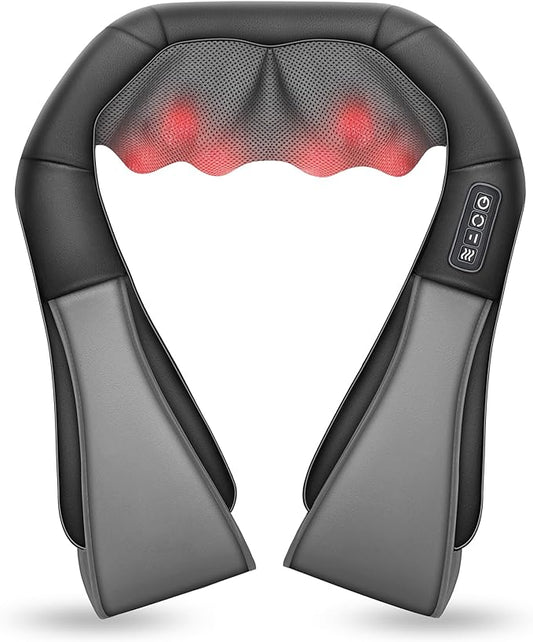
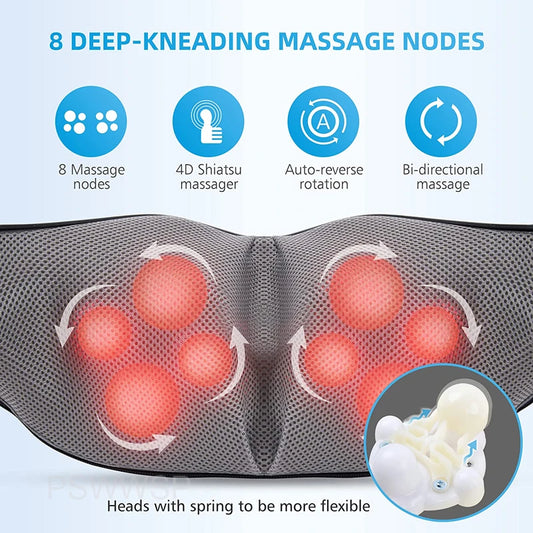
For tech neck specifically, a heated shiatsu neck massager outperforms vibration-only devices. Shiatsu nodes apply sustained, targeted pressure that reaches deep muscle knots, while heat therapy vasodilates blood vessels and accelerates recovery. Look for devices with bi-directional rotation, multiple intensity levels, and integrated heat at therapeutic temperatures (104-122°F). Cordless models are ideal if you want to use the device at your desk during work breaks.

How Often Should You Use a Neck Massager for Tech Neck?

For chronic tech neck, daily use of 10-15 minutes is both safe and recommended. Many users find the most benefit from two shorter sessions — one mid-workday to prevent tension buildup, and one in the evening to release what has accumulated. Consistency matters more than session length. An auto shut-off feature (typically 15 minutes) makes daily use convenient and safe.

Can a Neck Massager Prevent Tension Headaches?

Yes. Many tension headaches originate from tight muscles in the neck and upper trapezius — specifically the suboccipital muscles at the base of the skull. By releasing these trigger points through deep kneading and heat therapy, a quality neck massager addresses a common root cause of tension headaches. Users with chronic tech-neck-related headaches often report reduced frequency and severity with regular massage therapy.

💡 Pro Tip: Pair your neck massager with a 30-second posture break every hour. Stand up, roll your shoulders back, and look straight ahead. Prevention + relief is the winning combo.

Our Tech Neck Collection

Each of these therapeutic devices is specifically chosen to target the muscle groups affected by prolonged screen time and forward-head posture.